Mon–Sat 08:00–17:30 Songjiadai, Feiyun, Ruian, Zhejiang, China CNENESRU
Hotline 400-0577-098
QIANJIAPACKAGING MACHINERY
0577-65561077Selection · Quotation
Get a quote→
Home/Products/Paper Lid Machines

PAPER LID MACHINE

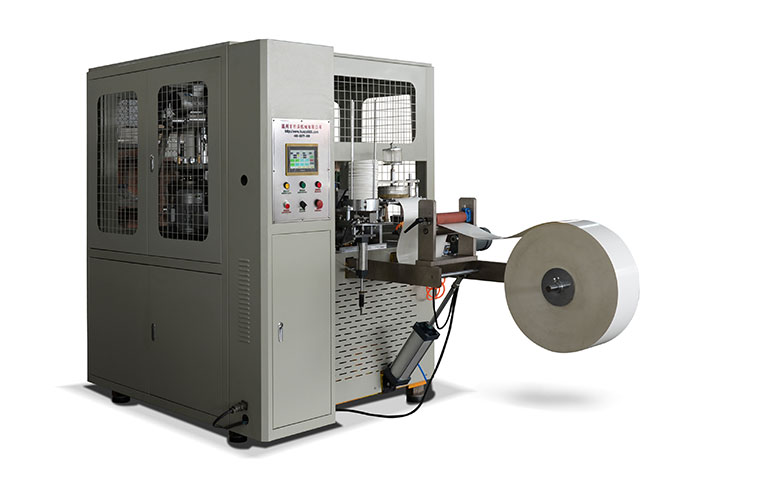
Automatic paper lid making machine

One roll of coated paper in, one formed lid out. DZ-100 removes tube cutting and hot melt glue: paper is fed from the reel, die-cut and rolled into a locked rim in a single pass.

Ice cream and cold drinksSoup and takeawayCoffee and tea shopsCup converters
70–100 pcs/minTypical output
AC 380 V / 50 Hz / 10 kWPower supply
9Models in series
AvailableCustom build

Series overview

PAPER LID MACHINE

Paper lids are high-volume, low-price and unforgiving on forming accuracy. The traditional route cuts and glues a tube first, which adds stations and leaves a glue line that softens in damp storage. DZ-100 takes paper straight from the reel, die-cuts the blank and rolls the rim mechanically, so the tube stage disappears and the machine holds 70–100 lids per minute.

The machine is built around 250–350 g/m² single or double PE coated paper. Changing the tooling switches the lid within Φ55–Φ90 mm diameter and Φ8–Φ15 mm height. Total power is 10 kW with 0.2 m³/min of air at 0.4 MPa, so a standard 380 V workshop supply is enough and no auxiliary equipment is needed beyond a compressor.

Models & specifications

TECHNICAL DATA · The models below are the standard series configuration. Forming tools, output and layout are adapted to your product.

DZ-100 single-station paper lid machine
DZ-100

DZ-100 single-station paper lid machine

Reel feed, die-cutting and rolled rim in one pass — no tube, no hot melt glue. The standard model of the series.

Key specifications
Paper250–350 g/m² single / double PE·PLA coated paper
Forming sizeHeight Φ8–Φ15 mm · Diameter Φ55–Φ90 mm
Output70–100 pcs/min
Power supplyAC 380 V / 50 Hz / 10 kW
Air supply0.2 m³/min @ 0.4 MPa
Dimensions2600 × 1500 × 1800 mm
Weight2500 kg

Figures describe the standard configuration. Machines are continuously improved; the delivered unit and the signed technical agreement prevail.

Applications

WHERE IT RUNS

01Ice cream and cold drinks

Lids for ice cream and sundae cups; flat, evenly stacked and ready for automatic lid droppers.

02Soup and takeaway

Deep lids for soup and congee cups with a tight rolled rim that holds through delivery.

03Coffee and tea shops

Flat and domed hot-drink lids with the printed face out and consistent registration.

04Cup converters

Installed beside cup and bowl machines so lids are produced in line instead of bought in.

Selection guide

WHAT TO DECIDE FIRST

  1. Check the paper grade

    250–350 g/m² is the standard window; below 250 g/m² reduce speed, above 350 g/m² increase forming pressure.

  2. Fix diameter and depth

    Diameter and height define the tooling; Φ55–Φ90 mm is standard, other sizes are quoted as custom tools.

  3. Decide the lid exit

    For inline lidding you need to agree stacking height, exit direction and buffer capacity.

  4. Match the upstream machine

    One cup machine is normally paired with one lid machine at a 1:1.1 speed ratio to allow for reel changes.

Frequently asked

FAQ

Is hot melt glue needed?

No. The rim is locked mechanically by rolling, which removes the glue unit, the glue cost and the risk of a glue line softening in humid storage.

How long does a size change take?

Tooling and guides for a standard diameter take under two hours, followed by re-setting pressure and temperature for the new paper grade.

Can you make square or shaped lids?

Yes, tooling is made to sample. Shaped lids run slower than round ones and tooling takes about 20–30 days.

Can the voltage be changed for export?

Yes, to 220 V/60 Hz or supplied with a transformer and the plug standard of the destination country.

What is the lead time?

25–35 days for the standard machine, around 40 days including custom tooling.

Need it built around your product?

Send sample photos, film structure and target output. Our engineering team handles tooling, non-standard structures and full-line layout.